What’s Going on at the Museum
Lithography Demos on September 5th
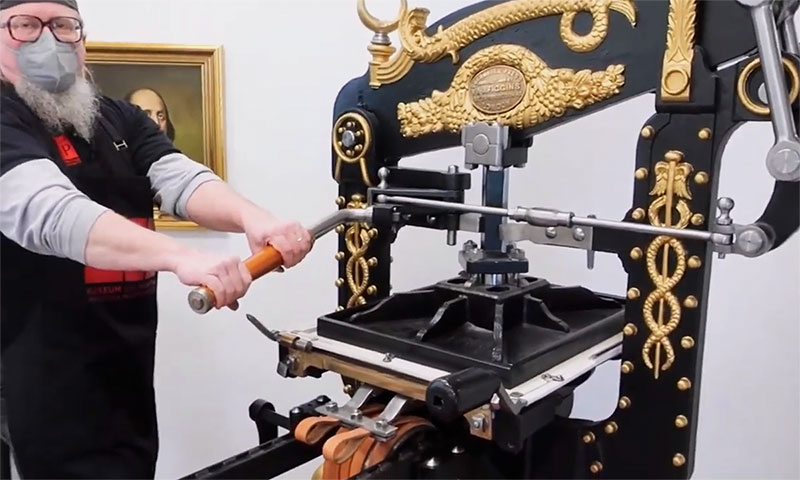
What is Lithography? This print method balances magic, chemistry and art to create beautiful prints, advertising and so much more. See printing in action and learn about this fascinating print method on Saturday, September 5, from 10:30 to 3:30 at the Museum of Printing. Free with admission!
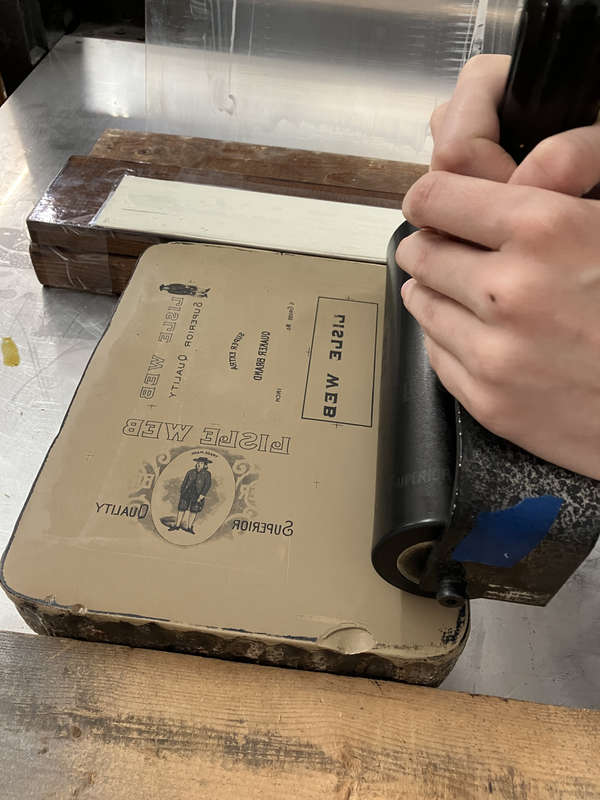
Pictured: Emma Levinson
Photo credit: Carolyn MuskatSaturday Workshops & Events 2026
On any given Saturday/Open Day there could be a public event in the Meeting Room, in the Community Studio, or on the Exhibit Floor. Depending on the content of the event (workshop, lecture or demo), there could be more than one in a day.
Click the red links for more info and to register for workshops & events.
August
- Thursdays in August
- Children‘s Activities at 10 am & 12 pm
$10 ticket required
- August 6th
- Papermaking
Info & registration→
- August 13
- Relief Printing with Foam Stickers
Info & registration→
- August 20
- Simple Scrap Journals
Info & registration→
- August 27
- Printing with the Alphabet Factory
Info & registration→
- August 1
- Gary Gregory will be demonstrating 18th century printing techniques at 11am and 1pm
- August 8
- Garage & Book Sale / Print Arts Faire
(Tax-free weekend in MA)
- August 15
- Workshop: Wood Type Poster with Letterpress
Spots are limited. More info & registration here→ https://www.eventbrite.com/e/1993470344463?
September
- Sept 5
- Lithography Demos from 10:30 to 3:30 · Free with admission
- Sept 12
- Book Arts Open Studio
Sign up here→
- Sept 13 & 27
Sundays, 11 am to 2 pm - Visit the Museum of Printing and take a tour through the history of printing and communications. Don’t be afraid to get inky and participate in our printing demonstrations too! Free Admission.
- September 19
- Letterpress Intro+ Workshop
Sign up here→
Workshop: Wood Type Poster with Letterpress
Sunday, September 27th from 10 am to 3 pm at the Museum of Printing
(The August 15th workshop has sold out)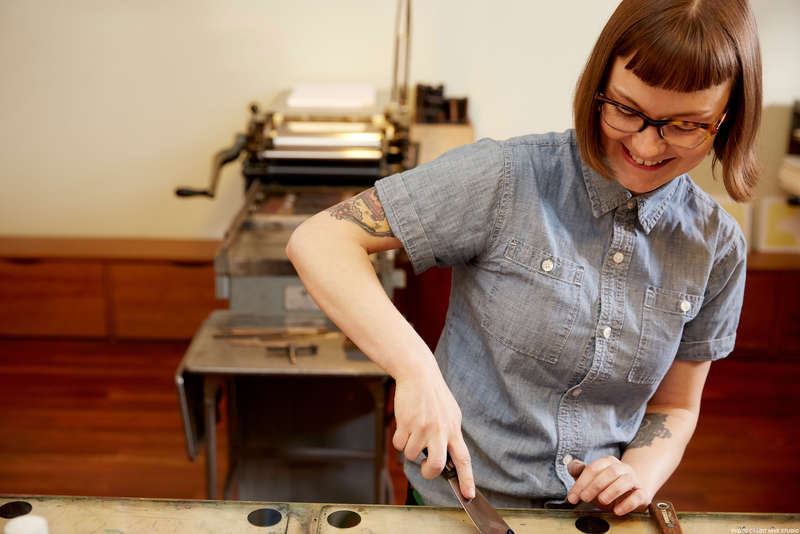
Work hands-on with Erin Davis in this one-day 5-hour workshop open to beginners and above. Students will print a poster using wood type from our collection and have the option of choosing a variety of pre-printed backgrounds to complete their poster. At the end of the workshop students will have a 12″ × 18″ poster.
September 27th workshop tickets available at: https://www.eventbrite.com/e/1994947996159?aff=oddtdtcreator
Hobby Printing Three-Part Series by Brian Lewis
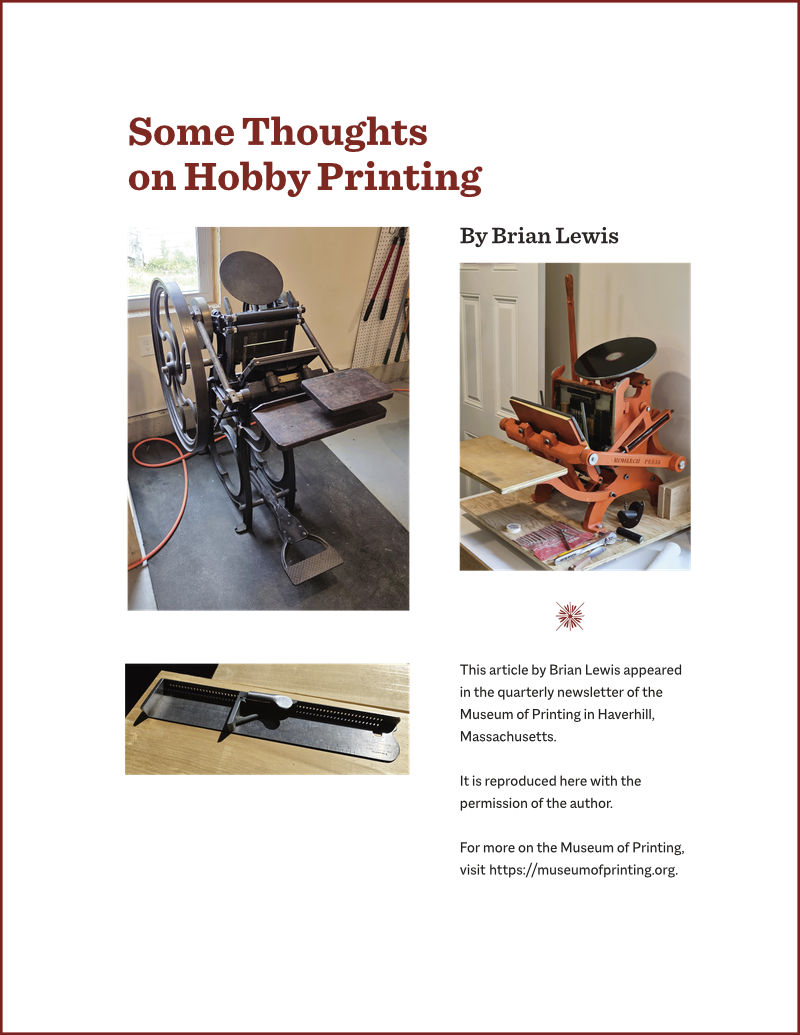
Due to reader demand, we have compiled a booklet of the three-part series that Brian Lewis wrote on Hobby Printing for the Museum’s newsletter. Click here to get your copy of that compilation.
Introducing our New Museum Manager: Mindy Mitrano
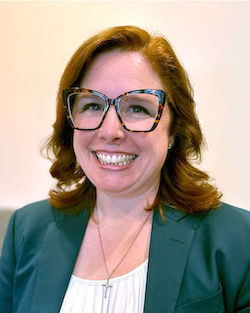 The Museum of Printing has named long-time volunteer Mindy Mitrano to the newly created role of Museum Manager. The move is one of a series of actions by the Haverhill, Massachusetts-based museum as it enters its next half century of telling the rich story of print and other forms of communications.
Mitrano, who also lives in Haverhill, began her association with the Museum in 2018 as the librarian. Her other roles at the Museum have included gift shop curation, event management, and the monthly Book Arts Open Studio.
In addition to her work with the Museum, Mitrano is a professionally trained graphic designer with a foundation in fine arts. Originally from the Finger Lakes region of New York, she’s known locally as Mindy Paper. She teaches a variety of classes at her combination art studio and cookie bakery, often integrating watercolor, typography, cut paper manipulation, letterpress printing, paper-making, or book binding.
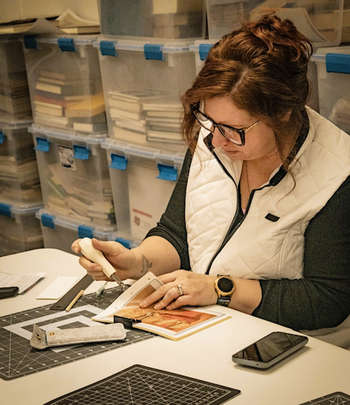 In her new role as Museum Manager, Mitrano will oversee day-to-day operations of the Museum. She will also coordinate the work of its dedicated core of volunteers as well as outreach to schools, non-profits, and others.
 “Mindy has long been an active and valuable member of the Museum of Printing community,” said Museum of Printing President Frank Romano, who helped to found the Museum and is one of the nation’s leading experts on printing and related topics. “She will help the Museum continue to grow and expand its important work.”
Mindy Mitrano Is a 2026 ECCF Creative County Changemaker!
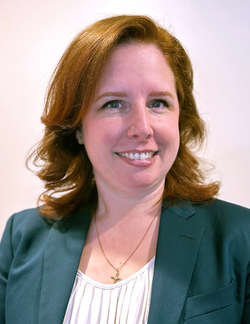 The Museum of Printing is delighted to announce that Museum Manager Mindy Mitrano has been selected by the Essex County Community Foundation (ECCF) to be a part of the 2026 ECCF Creative County ChangeMakers, an alliance of artists, nonprofit and municipal leaders, and small business owners who are collaboratively driving community change inclusive of arts and culture. For details, see: https://www.eccf.org/blog/2026/03/12/residents-selected-for-eccfs-creative-county-changemakers-program/
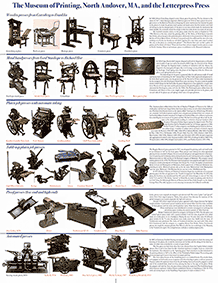
Download our Letterpress Presses poster (pdf, 1.8 MB)
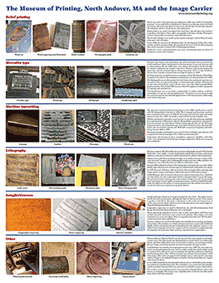
Download our Image Carrier Poster (pdf, 684 KB)
 Programs are supported in part by grants from the Georgetown, Groveland, Haverhill, Lawrence, Merrimac, Middleton, North Andover, West Newbury Cultural Councils, local agencies which are supported by the Massachusetts Cultural Council, a state agency.

 We promise not to spam your inbox. We send out a monthly email listing upcoming lectures and news along with occasional special event emails to make sure you know about big happenings at the Museum.